How to time a fall vegetable garden by counting back from frost
Figure out exactly which fall vegetables to plant and when to put them in the ground by using a simple count back method from your local frost date.
Set down by Wyatt Umland
7 minutes, read slowly
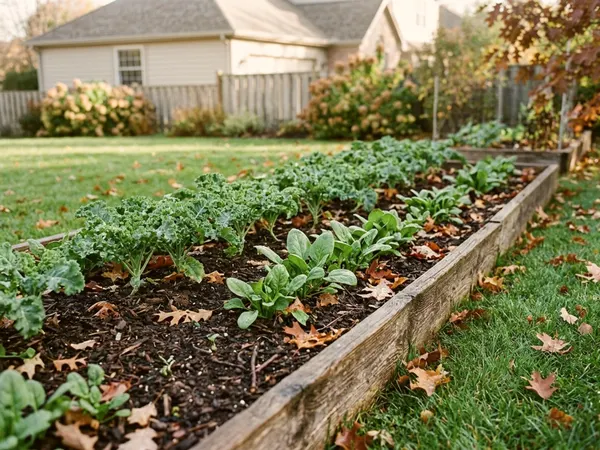
When you choose fall vegetables to plant, you need to know exactly when to put the seeds in the dirt. You find the right date by counting backward from your area's first expected frost. Just take the days to maturity on the seed packet and add about two weeks for slower autumn growth.
Why fall plants need more time than the packet says
Seed packets print a clear number for days to maturity. That number assumes the plant will grow during warm spring days. Spring days stretch out and the soil warms up.
Fall planting works in complete reverse. The days get shorter and the weather gets cooler. Plants slow down as they lose sunlight.
A seed planted in May needs less time to grow than the exact same seed planted in September. The soil holds some summer heat, but the sun sits lower in the sky. Photosynthesis slows down because the plant receives fewer hours of direct light.
Why do plants stall out in late autumn? Cool weather and short days slow growth.
Virginia Tech's count back method adds a fall factor of about 14 days for slower growth in cool, short days. You add those two weeks to the maturity number to get a realistic harvest date.
For this reason, Virginia Tech suggests choosing the earliest maturing varieties for late plantings. A fast radish or a quick spinach has a much better chance of finishing before a deep freeze hits the yard.
You want the crop to reach full size while the sun still provides enough daily energy. If you plant a late variety, it may not finish before cold weather ends its growth.
How to find your local frost date
The entire count back sum depends on knowing your average first frost date. A frost date is the day temperatures drop enough to freeze water for the first time in autumn. It acts as the finish line for your summer and fall garden.
You can find your area's average first frost date through your local extension office or a farming almanac. Frost dates are historical averages. A freeze can hit early or late.
Knowing the average gives you a solid anchor to plan your garden beds. You might be deciding what to fill a raised bed with or just turning over a patch of ground out back. Once you have the date, you can plan exactly when the seeds need to go in.
Your own yard might have a microclimate that changes things slightly. A low spot at the bottom of a hill collects cold air. That spot may freeze earlier than the rest of the yard.
A garden bed pushed up against a south-facing brick wall holds heat. That brick might stave off the frost for a little longer. A yard in a dense city may stay warmer than an open suburban lawn.
The average date just gives you the mathematical starting point. Keep an eye on the local weather forecast as the date approaches. A strange cold front might blow through early.
You might need to cover your plants with a blanket or burlap for the night.
Doing the count back sum
Grab a calendar, a pen and your seed packets. You will do a simple math equation for every type of vegetable you want to grow.
- Find the days to maturity printed on the back of the seed packet, plus the days you want to keep harvesting.
- Add 14 days to account for the fall factor.
- Count backward that total number of days from your first frost date.
- Mark the resulting planting date on your calendar.
You add the printed days to maturity to the extra two weeks for slower fall growth. Then you count backward that total number of days on the calendar from your frost date. That calendar square is your planting day.
You plant your seeds on that exact date. You can write the planting dates directly on your seed packets with a marker. This takes the guesswork out of the planting schedule.
You will know what needs planting in late summer and what can wait until early fall. You will likely do this math in the middle of summer. Fall planting often means sowing seeds while the weather is still hot.
You need to water the beds deeply before you plant. The seeds still need moisture to germinate. They need plenty of water even if they are destined for a cool autumn harvest. Keep a watering can nearby and soak the soil thoroughly.
Do not skip counting the days on the physical calendar. Counting in your head often leads to mistakes. A visual check on a paper calendar shows you exactly how much time you have left.
Add two extra weeks for frost tender vegetables
Some summer plants die the moment frost touches them. You might want a late harvest of these crops before winter sets in.
To handle this, Virginia Tech adds a further 14 days for frost tender crops such as corn, bean, cucumber, tomato and squash. Frost can end their growth and harvest.
They need to finish completely before the first frost arrives. The extra two weeks act as a safety buffer. If the frost comes early, your vegetables have a better chance of being ripe already.
For a tender crop, you take the days to maturity and add the initial fall factor. Then you add the further 14 days for frost safety. You count back that larger total from your frost date to find the planting day.
You might also want to read up on how to grow cucumbers that stay crisp so you get the most out of that final late harvest. Tender crops will not survive a freeze.
Picking the right date improves your odds of a crop. If you skip the math, you may end up with green tomatoes or empty bean pods hanging on dead vines.
Cold hardy crops that survive the frost
Not every vegetable dies when the temperature drops. Cold hardy vegetables can handle a light frost. Kale, spinach, carrots and Brussels sprouts can handle some cold.
You still use the basic count back sum for these vegetables. They need to reach maturity before the short daylight hours stop their growth entirely.
Plants essentially stop growing when the days get extremely short. They just do not need the extra safety buffer that tender crops require.
Once cold hardy plants reach maturity, they can sit in the garden through cold weather. You can often harvest them well past the first frost date. You can walk out in a winter coat and pick fresh kale for dinner.
The freezing weather acts like an outdoor refrigerator. Root vegetables are particularly good at handling the cold. The dirt insulates the carrots and turnips from the freezing air above.
The tops might eventually die back, but the roots remain crisp and ready to eat underground. You can keep harvesting them until the ground freezes completely solid.
Using mulch and covers to stretch the season
You can keep the garden going long after the frost arrives. A thick layer of straw or shredded leaves over the soil helps protect plants and soil from the cold.
Heavy mulch protects root vegetables from the chill. You can leave root crops in the ground under a thick blanket of straw. You just brush the mulch aside and pull them as you need them.
If you are preparing your beds for autumn, checking how deep to spread organic mulch will help you get the layer thick enough to matter. A thin sprinkling of leaves may not protect much, so spread a thick layer.
You can also lay a floating row cover over the plants. This spun fabric acts like a light blanket. It can keep the air around the leaves a little warmer than the outside air.
Sunlight still gets through the fabric during the day. The plants can still perform limited photosynthesis. You can bend flexible plastic pipes over the beds to create small hoops.
These hoops hold the fabric off the leaves so heavy snow does not crush the plants. You can buy rolls of this fabric at many garden centers. It can let rain through, so you may not have to uncover the plants every time you water.
Keep the row covers pinned down tight with rocks or bricks so the cold wind cannot get underneath.
More for the same weekend
7 minutes, read slowly
A vegetable companion planting chart and what actually works
7 minutes, read slowly
How to grow cucumbers that stay crisp and keep coming
6 minutes, read slowly
How to grow potatoes in a bucket, bag or tub on a small patio