What to fill a raised bed with for vegetables
Find out what to use in raised beds for vegetables to create the best soil mix for healthy plant roots, easy drainage, and a bigger summer harvest.
Set down by Ulysses Wrenfield
8 minutes, read slowly
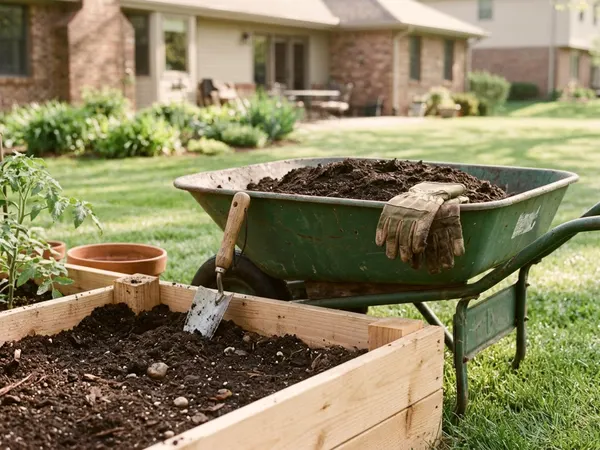
Fill your raised beds for vegetables with a mix of topsoil, compost, and drainage materials like perlite. A good blend gives roots a loose structure to push through. It holds enough moisture to feed the plant and lets the excess water drain away.
How deep the soil needs to be for common vegetables
Roots need room to grow downward into the dirt. The depth of your soil dictates what you can plant. University of Illinois Extension suggests building raised beds 12 to 24 inches high. They say beds can be as short as 6 inches.
If you have a shallow frame, stick to shallow crops. Shallow-rooted crops such as lettuce, radishes, and spinach suit a short bed. Their roots stay close to the surface. You can grow a lot of salad greens in a very short bed.
Larger crops need deeper soil to thrive. Tomatoes and peppers send their roots deep to find water. Carrots need loose dirt to grow straight. Give these plants the deeper end of the 12 to 24 inch range.
Roots cannot break through a patio, so a bed over concrete needs enough soil depth to hold them. If it sits on grass, roots can push into the ground below. You might want to build a taller bed just to save your back. A frame built 24 inches high means much less bending.
Think about the ground under the bed. A shallow frame over hard clay can trap water at the clay layer. The bed can turn into a bathtub, and heavy rain may drown your plants.
You can loosen the ground under the bed before you fill it. Dig down with a garden fork. Break up the hard dirt. This can give excess water a place to drain.
A deeper bed holds a larger sponge of soil. It tends to stay damp longer than a shallow box. A bed built just 6 inches high may dry out fast on a hot summer day. You may have to water it often.
Building a tall bed requires a lot of soil. The volume adds up fast. Calculate the volume in cubic feet before you buy a frame.
Multiply the length by the width and the depth. This math tells you exactly how much soil you need to haul.
The mix that drains well and still holds water
You have to fill the frame with something that behaves better than normal yard dirt. Good garden soil is a balance of solid parts, air, and water. You can blend your own mix to get this balance exactly right.
There are two standard ways to mix raised bed soil. The first method uses three parts. University of Illinois Extension suggests a mix of about one third topsoil, one third organic matter and one third vermiculite and perlite.
Topsoil gives the mix bulk and weight. It gives roots something solid to grab onto. Organic matter feeds the plants. This part can be compost, composted manure, or leaf mold.
Organic matter acts like a sponge to hold water. Vermiculite and perlite are the small flakes you see in commercial potting soils.
Vermiculite is a mineral that absorbs water. Perlite is a volcanic rock that helps water run through. They keep the mix loose and hold small pockets of air.
The second method is a bit simpler. Clemson Cooperative Extension suggests a mix of good topsoil and compost. They advise compost making up 10 to 20 percent of the bed volume.
This method works well if you buy high quality topsoil. The compost adds nutrients for your seeds. You can use bagged composted manure or compost from a backyard pile.
Buying bags of soil is easy for a small bed. You can load them in a car and carry them to the yard. Bagged soil is ready to pour.
Bags require too many trips to the store for a large bed. You will want to order bulk soil from a local garden center. A truck drops a pile on your driveway. You then move it to the frame with a wheelbarrow.
Mixing bulk soil takes some physical work. Do not dump all the topsoil in first. You will never get it mixed.
Add a thick layer of topsoil, then add a layer of compost. Pour in your perlite if you are using it. Turn the layers with a garden fork. Repeat this process until the bed is full.
You can also mix the dirt on a large plastic tarp on the lawn. Shovel small amounts of each ingredient onto the plastic. Two people can grab the corners of the tarp and roll the dirt back and forth. Pour the mixed dirt into the frame and start the next batch.
Water moves differently in a raised frame. A deep bed with lots of perlite drains fast. The water falls straight through to the bottom. You need to water slowly to give the compost time to soak it up.
Put a hose on a slow drip. Lay it on the soil for a few minutes. Check the soil with your finger before you turn the water off.
Push your finger into the dirt up to your knuckle. The soil should feel damp all the way down.
Why too much topsoil goes wrong
You might be tempted to just fill the frame with cheap topsoil. Why does pure topsoil go wrong? Illinois Extension says too much topsoil holds too much water, and it is heavy and dense.
It looks fine when it is dry. It can turn into a solid block when it gets wet and dries out again.
Pure topsoil can compact over time. Gravity pulls the fine particles down. Water fills in the air gaps. The soil settles and gets hard.
Plant roots are fragile. They cannot push through a brick of hard dirt. They stay near the top. Plants can stunt and produce less food.
Compacted soil also ruins drainage. Rain hits the hard surface and pools. It runs off the sides of the bed onto the lawn.
The water never reaches the roots deep below. Your plants can die of thirst while sitting in a puddle.
Adding compost helps prevent a hard crust from forming on the surface of your bed. Organic matter breaks up the heavy dirt. It feeds earthworms and soil bugs, which tunnel through the dirt in search of food.
Their tunnels create paths for air and water. The soil stays crumbly and loose. You should be able to push your bare hand deep into the dirt without hitting a solid block.
Avoid shoveling dirt straight from your yard into a raised frame. Yard dirt can be heavy clay or loose sand, and it may bring weed seeds and grass runners with it.
You will spend the whole summer pulling weeds. You built the frame to escape bad yard dirt. Fill it with a fresh mix to give your vegetables a clean start.
What to plant in the first season
You have a full bed of fresh soil. Now you need to decide what to grow. The best vegetables for raised beds are the ones you actually want to eat. You also need to match the plants to the sunlight your yard gets.
Look at the spot where you put the frame. Penn State Extension notes that most vegetables and flowers need at least 6 to 8 hours of full sun every day. Watch the shadow of your house and trees.
A spot might look sunny in the morning but sit in deep shade all afternoon. If your bed is in the shade, your vegetables may grow tall and thin.
If your yard gets plenty of direct sun, you can start with easy crops. Tomatoes love the deep, loose soil of a raised frame. Plant bush beans along the edges of the box.
Bush beans grow quickly and produce a steady harvest for the space they take up. Radishes sprout quickly. They are a great first plant to build your confidence. You can start a vegetable garden with just a few packets of basic seeds.
Bush varieties work better than vining types. Vining plants like pumpkins take up too much space. A single pumpkin vine can smother a whole bed.
Look for seeds labeled compact or bush at the hardware store. These plants stay small and yield plenty of food.
Plant tall crops on the north side of the bed. Plant short crops on the south side. This simple arrangement stops the tall plants from shading the short ones. Tomatoes can block the sun from your lettuce if you put them in the wrong spot.
Read the back of your seed packets before you plant. The packet tells you how far apart to space the seeds. Crowded plants fight for water and food.
Crowded stems block the wind from blowing through the leaves. Damp leaves encourage mold and disease. Give your vegetables enough room to breathe. You will often pick more food from a few healthy plants than from a dozen stunted ones.
Top up the bed each spring
Your soil mix will shrink over the winter. The dirt does not actually vanish. The organic matter rots down.
The fluffy compost breaks into tiny pieces. The whole bed settles down noticeably.
You do not need to empty the frame and start over. You just need to add new material. Wait for the ground to thaw in early spring.
Pull out any dead plant stalks left over from fall. Rake away old leaves.
Spread a fresh layer of compost over the top of the dirt. A thick covering is usually enough. You do not have to dig it in deeply.
Take a garden fork and gently loosen the top layer. Mix the new compost into the old dirt. This adds fresh food for the new season. It restores the volume you lost over the cold months.
Avoid turning the soil all the way to the bottom. Deep digging can bring old weed seeds to the surface and break up the tunnels worms make. Just fluff the top layer.
Check the wood or metal sides of your frame while you work. Tighten any loose screws. Make sure the corners are still square. The freezing and thawing of winter can push boards apart.
Water the bare soil before you plant new seeds. A dry bed repels water. A gentle soak wakes up the soil life.
You can spread a layer of straw over the soil after you plant your seeds. This mulch protects the fresh compost from the hot sun. It stops the wind from drying out the top layer.
Bare soil loses water quickly on a breezy spring day. Straw keeps the moisture in the dirt where the roots need it.
More for the same weekend
6 minutes, read slowly
How square foot gardening fits more into a small raised bed
5 minutes, read slowly
What experts disagree on about galvanized garden beds
6 minutes, read slowly
How tall a raised garden bed should be for easy reach