Minimalist home decor for a family that owns a lot of stuff
Find out how to get minimalist home decor for a family with a lot of stuff by using smart storage, quiet colors and calming textures.
Set down by Winona Upchurch
7 minutes, read slowly
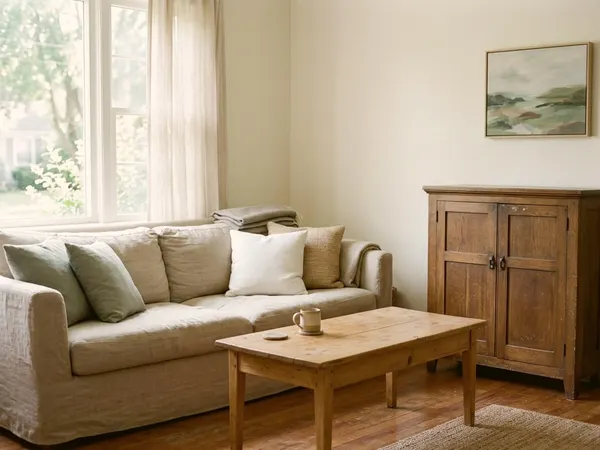
Minimalist home decor for a family with a lot of stuff relies on hiding daily clutter behind closed doors. You set a calm base with repeating colors and natural materials. Then you leave out only the things that look good or see heavy use.
What minimalism looks like with a family
A house with kids or teenagers rarely stays perfectly tidy. A family gathers jackets, shoes, school papers and heavy coats. Minimalism in a busy house is not an empty white box. It is a room that feels calm when you walk in.
You do not have to throw away everything you own. You just need a system to control what sits out in plain view. True minimalism for families is about visual quiet. A room filled with things can still feel peaceful if those things are organized and out of sight.
Someone living alone can survive with a basic pan and a mattress on the floor. A family needs baking sheets, winter boots and boxes of bandages. The trick is giving all those necessary items a strict home. When everything has a place, the main living areas stay clear.
Focus on how a room feels rather than counting the objects in it. You want space to breathe. You want to sit on the couch without staring at laundry or bills. That feeling of relief is the actual goal.
Clear the surfaces people notice first
Eyes naturally rest on flat surfaces when you walk into a room. Kitchen counters, dining tables and coffee tables act like magnets for clutter. When these gather mail, random cups and car keys, the whole room feels chaotic.
Clear off the horizontal spaces that catch the eye from the doorway. If space is tight, some smart entryway ideas can help. Scoop up the loose shoes and keys. Put them in baskets or a small cabinet with doors.
We drop mail on the dining table because it is the first flat surface we pass. You can change this by putting a specific tray on a side table near the door.
Make that tray the only allowed spot for paper. Small piles of paper quickly turn into visual noise. Gather them up and process them weekly.
Look at your kitchen island or counters. Put away the toaster and the blender if you do not use them every morning. A clear counter leaves visual breathing room.
Leave out a wooden bowl for fruit or a stack of plates you actually use. Sweep the rest into a drawer. The absence of clutter makes a kitchen feel larger and much cleaner.
Put the bulk of life behind closed doors
Open shelving asks for trouble in a busy house. Every spine on a book and label on a box can demand attention. A wall of things to look at can tire the eyes. Keep your open shelves for a few chosen pieces.
Put the daily mess behind solid cabinet doors. Look for furniture that swallows the chaos. A living room cabinet with wooden doors hides board games, extra blankets and charging cables.
Avoid glass doors on your storage furniture. Glass just puts your clutter in a frame. If your home lacks built-in storage, use large dressers or sideboards in the living room, and anchor tall pieces as the maker directs. Sometimes organizing a house means adding heavy furniture.
When you do leave things out, group them together. A few books and a small plant on a shelf look intentional.
A pile of random objects scattered across a mantle looks like a mess. Groupings create structure. Give your eyes empty space to rest between groups.
Bathrooms gather plastic bottles and tubes of paste very quickly. You can make an ordinary bathroom feel calm just by putting the brightly colored bottles under the sink. Keep only soap and a clean towel by the basin.
Stick to a short list of colors and materials
A room with too many colors feels busy even when it is clean. A calm home relies on a quiet base. Pick a neutral color for the walls and large furniture. White, beige or a soft gray works well.
Then choose a couple of accent colors. Repeat those same colors throughout the house. When a blue pillow matches a blue rug and a blue vase, the room makes sense.
The items belong together.
You can keep plenty of things in the room as long as they follow the color rule. Kids' toys are often made of bright plastic. Keep those in bins. Let the main living space stick to your chosen palette.
Carry this idea into your materials. Pick a specific wood tone for the floors and tables. Choose a single metal finish for the lamps and cabinet pulls. Brass knobs look great until they compete with silver faucets and black iron hinges.
Limiting your materials brings order to a full house. Try to match the wood of your coffee table to the wood of your picture frames. These small connections can help the room read as a single, organized space.
Sort the hidden spaces so they hold more
A minimalist room only works if your cabinets can actually hold your things. If your drawers are full of junk, you have nowhere to hide the daily clutter. You have to organize the spaces behind closed doors.
Take everything out of your living room cabinets. Keep the items you actually use. Put the cords, batteries and random pieces into small bins.
A drawer works much better when it contains rigid containers. The containers keep small things from mixing together into a tangled mess.
Use vertical space inside your cabinets. Add a shelf riser to stack plates or board games neatly. When a cabinet is easy to use, your family will actually put things away. If they have to wrestle a heavy box out, they will leave it on the floor.
Make the storage fit the item. Keep heavy items low and light items high. Dedicate a whole cabinet to a single category, like arts and crafts or video games. Clear boundaries inside your storage furniture make a minimal home function smoothly.
Manage the things that flow into the house
A family brings a constant stream of new items into the home. Mail arrives, kids bring home projects and you buy groceries. A minimal house requires a way to handle this daily flow.
Set up a recycling bin right next to the front door or in the garage. Drop the junk mail and extra packaging straight into the bin. Do this before it ever hits your kitchen counter. Stopping trash at the door saves you from cleaning it up later.
Deal with school papers on a daily basis. Kids generate mountains of artwork and homework. Pick a specific folder for the papers you need to keep.
Hang the best drawing on the fridge. Recycle the rest when the kids are asleep. You cannot keep every scrap of paper and maintain a peaceful home.
Apply the same rule to your own purchases. When you buy a new sweater, let an old one go. Donate items you no longer wear.
Keeping the volume of stuff steady is easier than doing a massive clean out every fall. A calm house requires regular, small decisions rather than exhausting weekend purges.
Add warmth with texture so the rooms do not feel bare
Stripping away visual clutter can leave a room feeling cold. You avoid the sterile waiting room look when you bring in texture. Texture gives a space life without adding loud patterns or bright colors.
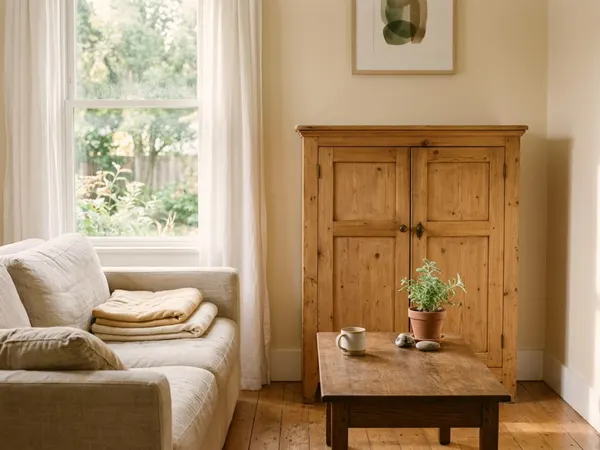
A chunky knit blanket on a smooth leather chair feels cozy. Layer different fabrics in the same color family. A beige wool rug under a beige linen sofa adds depth. The room stays minimal, but it also feels soft.
Use baskets to add texture and hide clutter at the same time. Woven baskets bring natural warmth to a bare corner. They also hold blocks, dog toys or extra pillows. Practical items that look natural help soften hard edges.
Houseplants also break up empty spaces. A green plant against a white wall looks clean and alive. Focus on how things feel to the touch. A worn wood table or a soft velvet pillow invites people to sit down.
A comforting space does not need extra objects. You can read a book or relax once you stop worrying about the mess.
Give every family member a spot of their own
A strict minimal house breaks down when real people live there. Kids drop toys and adults leave their hobbies on the table. Trying to control every inch of the house frustrates everyone.
Give each person a dedicated zone where they can be messy. Assign a drawer in the kitchen or a basket in the living room to each family member. They can drop their daily items there. You can close the drawer and keep the room looking clean.
Let a bedroom or a specific corner reflect their personal style. A child might want posters on the wall or toys all over the floor.
Just shut the door.
The main living areas stay calm while everyone gets to keep the things they love.
Agree on a quick daily habit to maintain the shared rooms. You do not need to clean for hours. A short evening reset routine keeps the clutter from piling up. Walk through the living room with a basket and gather the stray items.
Put those items back in their assigned drawers or bedrooms. Doing this every night is quick. You wake up to a clear house.
More for the same weekend
6 minutes, read slowly
5 comfort upgrades that fix a drafty house for good
8 minutes, read slowly
Accessible home changes that make every room easier to use
7 minutes, read slowly
7 home organization ideas for a house with no spare closets