Entryway ideas that make a small front hall easier to live with
A narrow front hall gets cluttered fast, but these simple entryway ideas for home clear the path and keep your daily routine organized.
Set down by Winona Upchurch
7 minutes, read slowly
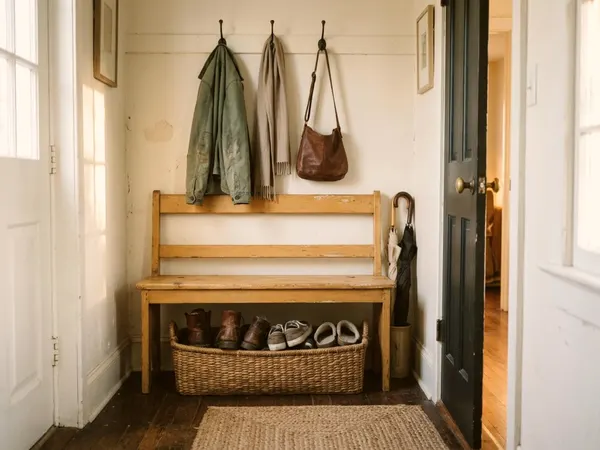
A narrow front hall gets cluttered fast, but practical entryway ideas for home can clear the path. A dedicated spot for shoes, coats and mail stops the mess from spreading past the front door.
Give shoes a strict home
Shoes pile up behind the front door and trip you when you walk in. Giving them a strict boundary keeps the entryway floor clear. Open racks let wet sneakers dry out in the open air. Closed cabinets hide the colorful mess of laces and tongues behind a clean panel.
Think about the shoes you wear every day. You only need to store those right by the door. Special occasion shoes belong in a bedroom closet. Keeping only the daily pairs outside cuts the pile in half and frees up floor space.
Winter boots demand their own solution. Snow and mud can be hard on hardwood floors. A rubber boot tray with a raised lip catches the melting slush. You can rinse the tray in the yard with a garden hose when it gets filthy.
A low rack with two tiers holds sneakers and flats neatly. Look for metal racks instead of wooden ones. Metal wipes clean with a damp rag. Wood can soak up water from wet soles.
When the weather gets warm, wash your winter boots and pack them away. Storing off-season shoes in a plastic bin under your bed keeps the front hall clear. A small entryway cannot hold a whole year of footwear. Cycle the shoes out as the seasons change.
If you have a strict rule about taking shoes off indoors, provide a spot for house slippers. Keep them right next to the shoe rack. You can swap your work shoes for slippers in one smooth motion as soon as you arrive.
Add wall hooks at the right height
Coats dropped on a dining chair make the whole house look messy. Wall hooks catch jackets the moment you step inside. They are the easiest way to keep outerwear off the furniture.
Spacing the hooks matters. If you mount them too close together, heavy winter coats will overlap and fall off. Space them several inches apart so each coat hangs flat against the wall.
You can stagger the heights to fit more items on an empty wall. Install a top row for long trench coats and bulky winter jackets. Put a second row underneath. This lower row catches shorter items like dog leashes and hats.
Wall hooks need proper support. Drywall alone may not hold a heavy winter coat. Fasten the hooks into a wall stud when you can. If you cannot find a stud, use drywall anchors rated for the load and follow the package instructions.
Kids need hooks they can easily reach. When children can hang up their own backpacks, they stop dropping them in the middle of the hall. Place a few hooks low down just for them.
Do not forget your smaller accessories. A simple wooden peg catches a wet umbrella by its strap. Having the dog leash resting on a hook near the door frame makes the morning walk much easier.
A standing coat rack can get top-heavy under winter coats, and it eats up floor space in a narrow hall. A row of sturdy wall hooks keeps the floor clear.
Choose a bench or shelf that fits the width
Sitting down to tie shoes is much easier when you have a dedicated spot. A narrow bench gives you a seat without blocking the door swing. It anchors the space and gives the hall a clear purpose.
Look closely at your hallway width. You need enough room to walk past the bench while someone is sitting on it. Look for slim profiles. Some benches are built specifically for tight spaces.
A bench with open space underneath works double duty. You can slide a row of fabric baskets beneath the seat. Baskets hide scarves, gloves and reusable grocery bags out of sight. Pulling a basket out is much faster than digging through a deep drawer.
A low bench also gives you the support to pull off stubborn rain boots. You can anchor one foot on the floor and pull. This is much safer than hopping around on one foot while you wrestle with a wet boot.
Consider the layout of the space and look into accessible home changes that make every room easier to use. A sturdy bench with solid armrests can give someone support when standing up.
If the hall is simply too tight for any bench, install a floating shelf instead. A wall-mounted shelf gives you a place to set down your coffee cup while you lock the front door.
Position the shelf carefully on the wall. Mount it high enough that you will not bump your hip against it. Round edges are safer than sharp corners. A tight space means you will brush past the furniture often.
Wood adds warmth to a white hallway. A solid oak or pine shelf brings natural texture indoors. You can easily stain the wood to match the trim around your front door.
Light the hall so it feels welcoming
Many entryways have a single bright overhead light. It casts harsh shadows and makes a small hall feel cold. Good lighting changes the mood the second you turn the key.
Start by changing the bulb itself. Swap a stark white bulb for a soft, warm alternative. Warm light feels softer after a long day.
Make the most of any natural light. If your front door has glass panels, keep them clean. Wiping the glass inside and out lets the afternoon sun warm up the hall. Pull back any heavy curtains that block the door.
A flush mount fixture sits flat against the ceiling. It keeps the space open overhead. Hanging pendants look nice, but tall guests might bump their heads in a low hallway.
Add a secondary light source if you have a shelf or console table. A small lamp softens the shadows in the corners. Leaving a low-wattage lamp on gives the house a cozy glow when you return late.
Battery-powered lights solve frustrating problems in older homes. If your hallway lacks an outlet for a lamp, use a rechargeable light and charge it as the maker directs.
Consider a motion sensor switch for the main overhead light, and hire a licensed electrician if you are not comfortable swapping a wired switch. The light turns on automatically when your hands are full of groceries. You never have to fumble for a switch in the dark. Many models turn off by themselves after you walk away.
Hang a small mirror to bounce the light
A small entryway feels bigger when a mirror reflects the light around the room. It bounces sunlight from a nearby window into dark corners. This simple trick makes a cramped space feel more open.
Hang the mirror near the door. You want to quickly check your face or fix your collar before stepping outside. Placing it exactly at eye level makes it useful for a final glance.
Do not hang a mirror directly opposite a bright bare bulb. The glare will blind you when you walk in. Position it where it catches indirect light from a window or a shaded lamp instead.
Frame style sets the look. A plain wooden frame blends easily into the wall. A thin metal border looks crisp and clean. Heavy frames overwhelm a tight wall and make the space feel cluttered.
Do not overcomplicate the size of the glass. A modest round mirror breaks up the straight lines of the door and the walls. A tall, narrow mirror lets you check your outfit. Pick the shape that fits the empty wall space best.
Keep the glass perfectly clean. Fingerprints and dust ruin the reflection. A quick wipe with glass cleaner keeps the entryway looking sharp.
Set up a tray for keys and mail
Mail and keys scatter across the kitchen counter if you walk past the entryway. A dedicated tray stops them from migrating deep into the house. It gives small items a strict boundary.
Put a shallow bowl or a wooden tray on your shelf. Drop your keys there the second you walk in. You will spend far less time hunting for your car keys on a busy morning.
Sort the daily mail immediately. The entryway is the best place to handle envelopes. Keep a small paper shredder or a recycling basket nearby. Junk mail goes straight into the bin before it clutters the kitchen.
Only bring important bills and letters further inside. A small letter holder next to the key tray keeps those organized. Standing envelopes upright saves valuable space on a narrow shelf.
The tray also works for outgoing items. Put your sunglasses and wallet in the bowl at night. Place the outgoing mail right next to your car keys. You will grab everything you need without thinking about it on your way out.
You can wipe the tray clean during a ten-minute evening reset that sets up tomorrow.
Add a small hook next to the tray for spare keys. Label the spare keys so you know which one opens the shed or the back door. Keeping everything in one place makes leaving the house simple.
More for the same weekend
8 minutes, read slowly
Accessible home changes that make every room easier to use
6 minutes, read slowly
A ten minute evening reset that sets up tomorrow
6 minutes, read slowly
A short evening journaling habit for people who never kept one