7 home organization ideas for a house with no spare closets
If your house lacks closet space, these practical home organization ideas will help you find hidden storage in the rooms and walls you already have.
Set down by Winona Upchurch
7 minutes, read slowly
Many homes come with tiny closets, and some rooms lack built-in storage entirely. Finding a place for everything means looking at blank walls, low clearances and empty corners. You can create enough storage to keep your rooms tidy without building an addition. These home organization ideas turn dead space into useful storage.
1. Claim the space behind and above your doors
A standard interior door swings open to reveal a blank wall that can hold a surprisingly large amount of stuff. Hang a wire rack over the top edge of a pantry door to hold spices, cleaning supplies or dry goods. This keeps everyday items out of the main walking path while keeping them easy to grab. Check the weight limit on any hook or rack before you load it with heavy winter coats, and use over-the-door hooks on a thin hollow door.
The back of a bathroom door is a perfect spot for extra towels and robes. Adding hooks here frees up space in a cramped vanity cabinet. You can dry wet towels out of sight just by leaving the door open.
Look up at the wall above the door frame. A long shelf mounted high across a doorway holds books or folded blankets out of the normal line of sight. It creates storage in a small bedroom without eating up any floor space. Anchor the brackets into wall studs with hardware rated for the load, and keep the heaviest items lower down.
2. Push low bins under beds and couches
The gap between the floor and the bottom of your furniture is a wide, shallow closet waiting to be filled. Slide flat plastic tubs or soft zippered bags under a bed frame to hold extra sheets and out-of-season clothing. Measure the clearance before you buy anything. You want containers that slide in and out freely, as they should never catch on the sofa fabric or the bed slats.
Fabric bags can breathe better than plastic tubs, which suits blankets and sweaters. However, solid plastic tubs keep dust bunnies away from your clean linens. If you have pets that shed, stick to solid tubs with tight lids.
Putting wheels on flat wooden boxes makes heavy things easier to pull out. You can keep magazines, spare electronics or children's toys hidden away in the living room this way. A low-profile sofa skirt or a hanging bedspread hides the bins completely from view. When you need to run the vacuum, you just roll the boxes out of the room.
3. Build shallow shelves along a blank hallway
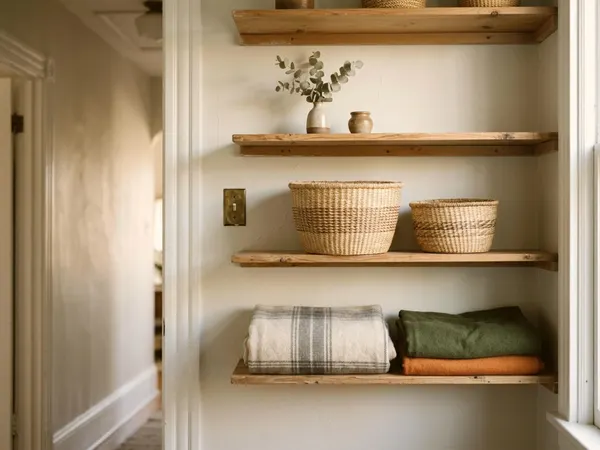
A wide hallway has plenty of room for narrow shelves that sit close to the wall. You only need minimal depth to line up paperback books, spices or folded hand towels. Building shelves straight up to the ceiling turns a useless thoroughfare into a library or a pantry extension. You can tame a small front hall just by putting a shallow ledge near the door for your keys and sunglasses.
Keep the walkway clear by stopping the shelves high enough off the floor to let a vacuum pass. You might even paint the shelves the exact same color as the wall so they blend in. This makes the hallway look tidy and prevents the shelves from feeling like heavy, imposing furniture.
The main downside of open hallway shelving is visual clutter. If you cram the shelves with mismatched items, the hallway will feel messy every time you walk through it. Keep the items neat and leave some empty space on every shelf so the wall can breathe.
4. Put a catch-all basket in every room
Stray items always gather on tables and counters throughout the day. Setting a nice basket in the corner of a room gives that daily mess a specific home. You can drop mail, stray socks and dog toys into the basket instead of leaving them scattered across the floor. The room looks clean immediately, and you know exactly where to look for a missing item.
Empty these baskets out on a set schedule. Carry the basket from room to room on a Saturday morning and put the items back where they actually belong. A woven basket looks like an intentional piece of decor, hiding the visual noise of random household things.
Place the basket near the spot where clutter naturally gathers. If your family drops their sweaters on the living room sofa, put the basket right next to the armrest. Working with your daily habits is always easier than trying to force a new routine.
5. Pack out-of-season items up near the ceiling
Winter boots and thick coats take up too much room to leave out in the summer. You can pack these seasonal items into matching bins and store them on the highest shelves in the house. Putting them out of reach frees up prime storage space closer to the floor for things you use every week.
High shelves in a laundry room or a garage work well for seasonal storage. Use a sturdy step stool, and ask for help, when you swap the heavy winter gear for summer beach towels. Ceiling-mounted garage racks can hold camping gear and holiday decorations out of the way, as long as you follow the maker's installation and weight instructions.
Label the front of each bin clearly with tape and a dark marker. Opaque bins hide messy contents, but they make it impossible to see what is inside without pulling the box down. A clear label saves you from opening every box on the high shelf just to find a specific pair of gloves.
6. Hide bulky items inside hollow furniture
Hollow furniture does double duty in a small room. An ottoman with a removable lid gives you a place to rest your feet and a cavity to hide throw pillows or a stack of board games. You can put a long wooden storage bench at the foot of your bed to hold thick winter quilts.
Messy cords ruin the look of a living room. Look for coffee tables with solid doors or lifting tops instead of open glass shelves. Open shelves require you to keep things perfectly neat, while closed storage lets you shut away a mess. A lift-top table can hold laptop cords, gaming controllers and remotes completely out of sight.
Check the hinges on any storage furniture you buy. Look for lids that stay open on their own so they will not slam down on your fingers while you pull out a blanket. Storage furniture can get heavy once it is loaded, so add felt pads to the feet to protect your wood floors when you move the piece to vacuum.
7. Trap loose paper at the front door
Mail and printed bills multiply on the kitchen counter if you leave them alone. You can stop paper clutter from spreading by setting up a sorting tray right where you walk in. Drop junk mail straight into a recycling bin and put bills into a dedicated folder. This keeps the dining table clear for actual meals.
A wall-mounted file organizer takes up no counter space at all. You can assign a slot for outgoing mail and a separate slot for things you need to file away later. Keeping paper contained to one spot prevents missing a bill and stops loose envelopes from covering every flat surface. This simple habit fits easily into a short evening tidy up.
Set up a small paper shredder near your sorting station. You can destroy credit card offers right away instead of letting them pile up in a drawer. Check the IRS website for how long to keep tax records before you shred any. Old grocery receipts and expired coupons can go straight into the trash.
Decide what needs to stay close
Some things belong exactly where you use them, even if storage is tight. You want coffee filters near the coffee pot and extra soap near the bathroom sink. Walk through your house and list the things you touch every single day. Finding a home for these daily items is your priority.
Move things you rarely use to the awkward corners of the house. A heavy roasting pan you only need for a holiday dinner can live on a high shelf in the garage.
Keep flat surfaces completely clear
A house feels much larger when the kitchen counters and bedroom dressers are empty. Flat surfaces attract clutter because they are so easy to drop things on. If you make a strict rule to keep your counters clear, you will force yourself to put things away in the storage spots you just created.
Wiping down an empty counter takes only a moment. When you have to move several small items just to clean a table, cleaning feels like a chore.
More for the same weekend
6 minutes, read slowly
5 comfort upgrades that fix a drafty house for good
8 minutes, read slowly
Accessible home changes that make every room easier to use
7 minutes, read slowly
Minimalist home decor for a family that owns a lot of stuff