How tall a raised garden bed should be for easy reach
Discover how tall above ground garden beds should be to save your back, why to match the height to your reach, and how a raised box works.
Set down by Ulysses Wrenfield
6 minutes, read slowly
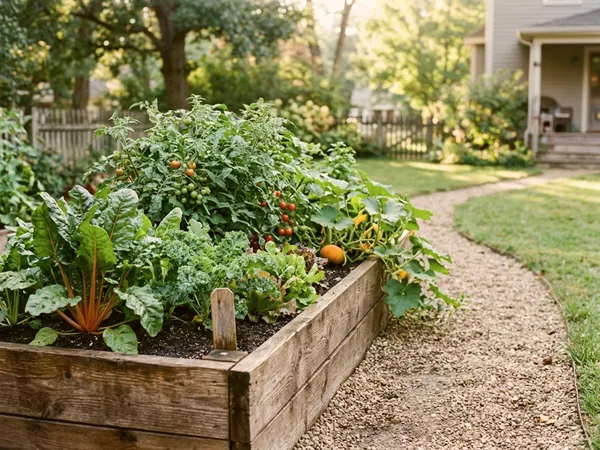
A good raised box takes the strain off your back and knees. The Illinois Extension recommends beds 12 to 24 inches high. This height lifts your plants enough to matter while keeping the dirt easy to manage.
What above ground garden beds are and who they suit
A raised frame holds a thick layer of dirt above the natural soil in your yard. Some of these boxes sit directly on the grass with open bottoms. Others rest on wooden or metal legs, leaving empty air underneath.
These frames bring the garden closer to your hands. They suit homeowners who want to grow vegetables but prefer to avoid bending over a flat patch of dirt. You can tend to the plants while standing right beside the box or sitting on a simple low stool.
A higher box also gives you control over the dirt you use. You fill it with a mix of topsoil and compost rather than fighting the rocky clay in your yard. You start with loose, rich dirt on day one.
This setup works well for starting a vegetable garden near your back door. You step out, pick a few leaves for a salad, and go back inside without kneeling in the mud.
Match the height to your reach and how you stand or sit
The right height depends completely on how you plan to work in the yard. The Illinois Extension recommends beds 12 to 24 inches high for raised beds. Where you land in that range depends on how you work.
A frame built to 12 inches high works well if you like to kneel on a cushion. You can reach the dirt without bending your spine too far forward.
At 24 inches, you can pull up a garden stool. You sit comfortably beside the box and work the soil at the level of your arms. This keeps your posture relaxed while you pull weeds, plant seeds, or pick a ripe tomato.
Think about how your back feels after a long afternoon in the yard. If low bending is hard for you, lean toward that 24-inch mark. Just remember that a taller box takes more bags of soil to fill.
These simple dimensions are also part of making accessible home changes for outside spaces. A well-placed tall box makes the yard usable and enjoyable for anyone who struggles with low bending.
Keep the width so you can reach the middle
Height is only one part of an easy reach. You also have to think about the distance from the wooden edge to the center of the dirt. A box that is too wide forces you to stretch too far, defeating the purpose of a tall frame.
The Illinois Extension says to build raised beds no wider than 4 feet so you can reach all the plants. At that width you can reach the middle from either side.
If you build wider than 4 feet, you will likely have to step into the dirt to reach a weed. Stepping inside packs the earth down flat under your boots. Hard dirt can make it harder for roots to grow and for water to drain through the box.
A narrower frame is better if you have to place it against a fence or a wall. When you can only reach in from one single side, keep the box narrow. This ensures you never have to strain your back to pull a carrot.
You can still fit plenty of plants in a narrow space. Learning how square foot gardening works helps you map out a tight grid. You get a solid crop without ever needing a massive, oversized frame.
Watering and drying out in a tall bed
Dirt in a tall box behaves differently than dirt resting in the ground.
A tall frame may dry out faster than a low one, so watch the soil. You need to watch your soil closely during the hot summer months. The top layer might look dry and dusty while the lower layer is still damp.
Push a finger into the dirt to check the moisture. If it feels dry a little way down, it is time to grab the hose. You may water your tall boxes more often than your flat flower beds, especially in midsummer.
When you do add water, soak the dirt completely. A deep drink encourages roots to grow downward rather than sitting near the dry surface. You want the water to reach the bottom half of the wooden box.
Morning is usually the best time to soak your plants. Watering early gives the leaves time to dry off in the afternoon sun. This habit keeps your vegetables healthy and stops common problems from taking hold in the wet dirt.
Legs, planters and frames compared
There are a few different ways to get your dirt off the ground. The style you choose affects how much you bend, what you can grow, and how you work around the garden over the weekend.
A simple wooden frame rests directly on your yard. It has sides but no bottom, so the dirt inside touches the earth below. These frames are heavy, sturdy, and rarely move once you fill them.
A box on legs looks more like a piece of outdoor furniture. It has a solid bottom with drainage holes and stands entirely above the grass. You can sweep underneath it, and you can pull a chair right up to the edge without hitting your knees on the wood.
Planters are usually smaller, standalone containers made of plastic, metal, or ceramic. They come in many shapes and sit right on a patio or deck. You can slide a planter around if you decide you want more sun.
- Frames resting on the ground connect with the earth below for natural drainage and deep roots.
- Boxes on legs save the most bending but can limit how deep large roots grow.
- Standalone planters work well for small spaces like an apartment balcony or a tight concrete patio.
If you want a permanent vegetable patch, a ground frame is often the most practical choice. A tall box on legs makes more sense if you only want a few small herbs near the kitchen door.
When a low bed does the job
You do not always need a tall frame to make the yard look good. Sometimes a low border is plenty to define a clean planting area. A short frame solves a few common problems without requiring a massive load of dirt.
If your yard already has decent earth, a low box simply gives you a tidy edge. It stops the lawn grass from creeping into your vegetables. You can run a mower right along the outside wood without chewing up your plants.
A low box is also a smart starting point for a beginner. It takes less lumber to build and takes much less effort to fill. You can try growing a few simple things without a massive commitment of weekend time or materials.
Because low frames sit close to the earth, you will still spend time on your knees. Grab a good foam pad from the shed to protect your joints while you weed. If normal bending is not a problem for you, a low frame might be all you really need.
You can always build a taller frame later.
More for the same weekend
6 minutes, read slowly
How square foot gardening fits more into a small raised bed
5 minutes, read slowly
What experts disagree on about galvanized garden beds
8 minutes, read slowly
What to fill a raised bed with for vegetables