Why your lawn has brown patches and how to fix each kind
Brown patches in lawn happen for several reasons, but you can find the cause by looking at the shape and edge before you decide how to fix the grass.
Set down by Wyatt Umland
6 minutes, read slowly
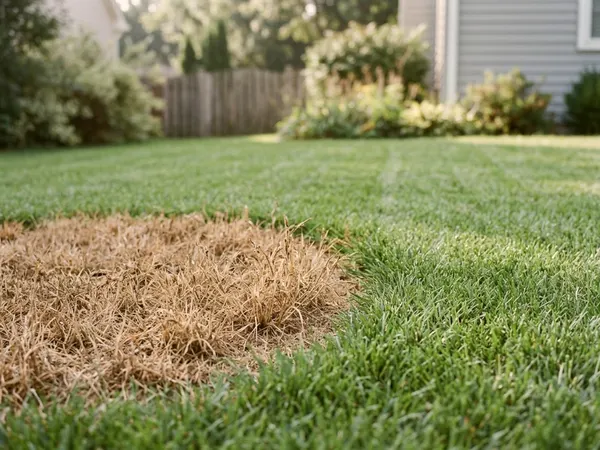
Brown patches in lawn happen because of animal urine, lack of water, pests or fungal disease. You can usually find the cause by looking at the shape of the damage and pulling on the grass. Finding the exact problem saves you time and stops you from treating the wrong thing.
Look at the shape and edge of the patch first
You can tell a lot about dead grass by its edges. A sharp, distinct circle usually points to an animal or a localized spill. A wide, uneven shape that spreads out over days suggests a disease or insects.
You also want to look at where the damage happens. Damage near a hot sidewalk might just be heat stress. Damage under a tree could mean a lack of sunlight or competition for water.
Sometimes the cause is right underneath the surface. Buried debris can leave patches that follow its outline. A piece of old concrete, a forgotten sheet of plywood or construction trash heats up and dries out the soil above it. The grass roots cannot grow deep.
If you see a square or sharp corner in your dead grass, stick a screwdriver into the dirt. You might hit a rock or an old pipe. You have to dig up the debris to fix the grass permanently.
Dog urine spots and the green ring around them
Dogs leave distinct marks on grass. The damage looks like a brown, dead circle with a ring of thick, fast-growing grass around the edge. Those dark green patches in a lawn appear because the outer edge gets a lower dose of nitrogen. The center gets a concentrated dose that kills the roots.
Dog urine spots come from nitrogen in the urine and not from soil pH, so diet changes or pH products do not fix them. The damage happens because the high nitrogen acts like a massive fertilizer spill. It burns the plant tissue.
You can stop the burn if you catch it fast. Flushing a spot with water right after a dog urinates is the only proven way to neutralize the area. Keep a watering can or a garden hose nearby. Soak the exact spot the dog used immediately.
You need to apply plenty of water to the patch. The extra water dilutes the nitrogen. You cannot reverse the burn once the grass turns brown.
Drought stress and the lawn that browns evenly
Grass needs regular water to stay green, and a dry yard often fades all at once. Drought stress shows as a brown tan lawn with footprints that do not fade. You walk across the grass and see your tracks flattened into the yard for hours. The grass blades lack the internal water pressure to spring back upright.
A yard usually turns brown from drought over a few weeks of hot weather. The soil gets dry, dusty and hard. If you push a long screwdriver into the ground, you meet strong resistance.
This kind of widespread browning does not mean the grass is dead. Many turf grasses go dormant in dry heat to survive. The leaves turn brown, but the crown of the plant stays alive.
You can wait out a drought. The yard will green up again when steady rain returns. If you decide to water the yard, soak the ground deeply. Shallow, daily watering encourages shallow roots.
You want the roots to grow deep into the soil to find moisture. Set up a sprinkler and let it run until the soil is wet well below the surface. Do this deeply but not often, rather than every day. Basic lawn care for beginners starts with building these deep watering habits.
Pull on the turf to check for grubs
Sometimes the grass looks brown because something ate the roots. White grubs live in the soil and chew off the root system just below the surface. If your grass feels loose, you might have a pest problem. You can pull the brown grass right up with your bare hands, and animals like skunks or raccoons might also dig up the dead patches at night.
You need to look in the soil to know for sure. Grubs are small, white, curled worms. To check for grubs, cut a one square foot section of sod at the edge of a damaged area and count them.
You want to look at the edge because that is where the active feeding happens. Use a spade to cut a square. Roll the grass back and dig into the top few inches of dirt.
A few grubs are normal, since the threshold is about 12 grubs per square foot. If you count about 12 or more, the grubs can cause damage that needs control, so treat the damaged areas with a grub control product and follow the label directions.
If you find fewer than 12, your brown patches more likely come from a different cause, and a healthy lawn can often outgrow the damage. Put the grass back and press it down firmly.
When a patch is a fungus and what that means for watering
A fungus can spread across a yard and leave irregular, brown areas. Brown patch disease often strikes in the middle of summer. It hits cool season grasses hard. Brown patch disease of cool season grass is favored by daytime temperatures of 70 to 90 degrees Fahrenheit, nights above 68 degrees and leaf wetness over 10 hours.
The fungus thrives in wet, sticky weather. You can often see small, tan lesions with dark borders on the individual grass blades. Your watering routine plays a large role in fungal growth.
You should water the yard early in the morning. The morning sun will dry the grass blades quickly. Watering in the late afternoon or evening leaves the grass wet all night. That long period of leaf wetness gives the fungus exactly what it needs to spread and damage the yard.
Fungicides sold to homeowners are not very effective against brown patch, so you often do not need them. Most tall fescue lawns recover from brown patch on their own with fall rains and fertilization. The disease rarely kills the crown of the plant.
The grass simply pushes out new, healthy blades as the weather cools down.
Rake, loosen and reseed a dead patch the right way
Some dead patches will not come back. Dog spots, chemical spills and heavy grub damage usually kill the grass entirely. You need to clear out the old material and plant fresh seed. You cannot just throw seed on top of dead grass, because the seed must touch bare soil.
Reseed with the same grass type as the rest of the lawn so the patch blends in. Choosing the right grass type prevents your patched spots from standing out. A patch of bright green rye grass looks obvious in a dark fescue lawn.
Follow these steps to replace a dead patch of grass:
- Rake out the dead grass and remove all roots and stems.
- Loosen the bare soil with a hard garden rake.
- Spread the new seed evenly over the patch.
- Press the seed gently into the dirt for good contact.
- Keep the seedbed lightly moist until germination.
Water the patch gently, because a strong stream from a hose will wash the seeds away. You want to keep the soil surface damp but not flooded. You might need to water the patch lightly more often in warm, dry weather.
Once the new grass sprouts, you can water it less often. Let the new grass establish a strong root system before you mow it.
You might need to repair a larger area if the damage is severe. Overseeding a thin lawn takes more work than patching a single spot. You will need to aerate the soil and spread seed over the whole property in early fall for cool season grasses. Fixing a small patch promptly keeps weeds from taking over while you wait.
More for the same weekend
6 minutes, read slowly
How to top dress a lawn with compost without smothering it
6 minutes, read slowly
Which type of grass suits your yard, sun and climate
7 minutes, read slowly
How to overseed a thin lawn so the new grass actually takes