Why dark green patches show up in a lawn and what to do
Find out why dark green spots in a lawn happen. Learn how pet urine and uneven feeding cause them, and how to even out your grass color.
Set down by Wyatt Umland
8 minutes, read slowly
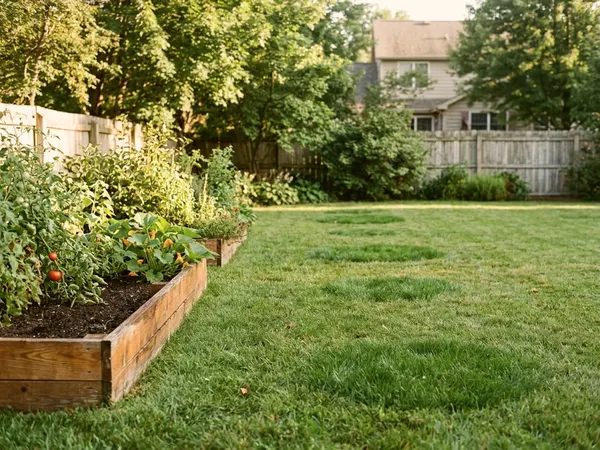
Dark green spots in a lawn are concentrated hits of nitrogen. They happen when dog urine or spilled fertilizer floods a small area with nutrients. You can blend these spots away by adjusting how you feed and water the rest of the yard.
Why grass turns dark green in patches
Grass relies on nitrogen to grow thick blades and hold a rich color. A lawn pulls nitrogen from the soil at a steady rate. When a patch suddenly turns a deeper green, it just swallowed a massive dose of nitrogen.
The grass in that spot kicks into overdrive. The blades grow taller and thicker. The color deepens.
Those dark green spots in a lawn stick out because the surrounding grass is lighter.
The overall soil lacks enough nutrients to match those high-growth spots. You are seeing a stark contrast between fed grass and hungry grass. You can usually trace the extra nitrogen back to a dog or a spreader.
Grass roots stretch out in every direction. They gather whatever nutrients sit nearby. Soil naturally contains organic matter. Bugs break it down.
Rain washes it in. This slow breakdown feeds the lawn a steady diet. When a concentrated nitrogen source hits the ground, it disrupts this slow cycle. The roots gorge on the sudden feast.
Nitrogen drives the production of chlorophyll. Chlorophyll gives grass its green pigment. When the roots hit a pocket of heavy nitrogen, they absorb it fast. The plant puts all that energy into top growth.
You might notice you have to mow these spots more often. The mower hits a thick patch and bogs down for a second. The rest of the yard might barely need a trim.
How dog urine acts as a nitrogen dose
Dogs process proteins in their food and pass the waste out as urea. Urea is a simple form of nitrogen. When a dog squats, it drops a tight, heavy circle of liquid nitrogen onto your grass. It acts much like a strong liquid fertilizer, and the salts in urine add to the damage.
Colorado State University notes that dark green spots from urine show most on lawns that are short of nitrogen. If you only feed your grass once a season, the general color stays pale. A dog pee spot supplies what the pale grass is missing. The spot greens up and stands out.
Female dogs often cause more spots than males because most dogs that squat are female, though some males squat too. A squatting dog empties its bladder in one place. The ground takes the full hit.
A male dog that lifts a leg on fences or tree trunks may spread the dose out. Large dogs make spots more noticeable, but small dogs can cause them too.
You might notice these spots showing up near the back door. Dogs often step off the patio and relieve themselves immediately. The pattern of spots can map out your dog's daily path. A heavy dose of nitrogen wakes up the grass.
It creates a lush circle of turf. The spot is mostly a looks problem. The grass is growing well. The yard just looks polka-dotted.
Colorado State says no dietary supplement has been proven to reduce these spots, so ask a veterinarian before adding one.
Extra water in the dog dilutes urine, which lowers the risk of turf injury.
Fertilizer spills and spreader overlaps
Urine is not the only source of sudden nitrogen. A heavy hand with lawn food does the exact same thing. You might fill a broadcast spreader on the grass instead of the driveway.
Some fertilizer spills over the edge. That small pile melts into the soil. A dark green spot can appear soon after.
Spreader overlaps create straight stripes of dark green rather than round spots. A drop spreader pushes fertilizer straight down between the wheels. If you overlap your wheel marks on the return pass, that narrow strip gets double the food.
A rotary spreader throws pellets in a wide arc. You have to space your passes perfectly. Walk too close to your last pass, and you double the dose.
You might also see dark spots where a spreader turned a corner. The wheels slow down, but the hopper keeps dropping pellets.
A heavy pile falls in one spot. These mechanical mistakes show up fast. They last until the grass uses up the excess nitrogen.
If you want to read up on lawn care for beginners, setting spreader dials correctly is a good start. Accurate feeding keeps the color smooth across the yard.
Granular fertilizer is easy to see and sweep up. Liquid fertilizer acts fast. If you use a hose sprayer, walking too slowly dumps excess liquid. The grass can take in liquid fertilizer through the leaves.
It can turn dark green quickly. You cannot rake up a liquid spill. You must water it down heavily.
Masking the spots with a steady feeding plan
You cannot pull nitrogen out of the grass once the roots absorb it. You have to bring the rest of the lawn up to match it. Raising the baseline color makes the dark green spots disappear into the background.
To handle urine patches, Colorado State suggests feeding more often or with more fertilizer to mask them. When the whole lawn gets enough nitrogen, every blade turns dark green. The dog urine spots no longer contrast with pale grass.
You have to balance this approach. Grass can only process so much food. You want to apply fertilizer at a steady, moderate rate.
A broadcast spreader covers large areas fast. Walk at a steady pace. Keep the hopper closed when you turn around at the edge of the yard.
Feed the lawn when the grass is actively growing. Check the bag for the best timing for your grass type. A well-fed lawn grows thick and crowds out weeds.
It also handles foot traffic better. Once the overall lawn color deepens, the urine spots blend right in. The polka dots fade away. You get a smooth, even yard.
Buying a bag of lawn food gives you control over the nitrogen levels. Look at the bag. The first number in the sequence tells you the nitrogen percentage. You want a steady release.
Slow-release fertilizers feed the grass gradually, so check the label for how they work.
This helps prevent sudden spikes in color. It can also keep new dark green spots from forming. You control the baseline.
Watering to flush excess nitrogen
Water moves nitrogen through the soil profile. If you see a dog pee on the grass, grab a hose.
Soaking the spot right away dilutes the urine, and Colorado State says water is the only product that can neutralize its effects.
You need a lot of water to make a difference. A quick spray may not be enough, so soak that specific spot.
A watering can works well. Keep one full on the back porch. Walk out and pour it over the spot right after the dog walks away.
You can do the same thing for spilled fertilizer. If you knock a bag over, scoop up every pellet you can. Then soak the ground.
Run a sprinkler over the spill zone and check the fertilizer label for watering advice. The water dilutes the nitrogen and can keep the spot from turning dark green.
Watering requires good timing. Flushing works best right away.
The sooner you water, the better the chance of diluting the nitrogen before the grass takes it up.
Encouraging your dog to drink more water also helps. Extra water in the bowl means extra water on the lawn. A hydrated dog dilutes their own nitrogen before it hits the grass. Keep a clean bowl of fresh water outside near their play area.
When dark green spots turn into brown patches
There is a limit to how much nitrogen grass can handle. A moderate dose creates a dark green spot.
A massive dose can kill the plant. A brown, dead center appears. A dark green ring of heavy growth circles the dead grass.
Nitrogen and salts built up in that small area, and the blades died. The edges of the spill got a lighter dose.
That outer ring greened up. Figuring out why brown patches appear starts with looking at those edges. If a dead patch has a dark green halo, it is likely a nitrogen burn.
You cannot revive dead grass. You have to replace it.
Raking the brown blades away will not fix the problem. The soil underneath can still hold a buildup of salt and nitrogen. Remove some of that soil too.
To fix dead spots, Colorado State says to remove the dead sod and some soil, about 0.5 to 1 inch, before repairing. Grab a hand trowel and clear the bad soil in these steps.
- Dig out the brown grass with a hand trowel.
- Scrape away the top 0.5 to 1 inch of dirt beneath the dead spot.
- Throw the contaminated dirt in the trash.
- Fill the shallow hole with fresh topsoil.
- Sprinkle grass seed over the fresh dirt and rake it in.
Seed takes time. Colorado State says to spot seed a Kentucky bluegrass lawn with perennial ryegrass or Kentucky bluegrass. Use turf-type tall fescue or fine fescue seed on those lawns, and patch zoysia and bermudagrass lawns with sod.
Check your season before you seed. If you miss the window, the seed will just sit there. Birds might eat it.
Weeds might crowd it out. Overseeding a thin lawn covers the soil prep you need. Removing the bad dirt gives the seed a safe place to grow.
If you want a faster fix, cut a piece of sod. Measure the hole. Cut a scrap of sod to fit exactly. Press it into the dirt.
Step on it to ensure the roots touch the soil. Keep the new sod well watered while the roots take hold. The roots will grab hold. The patch will vanish.
More for the same weekend
6 minutes, read slowly
How to top dress a lawn with compost without smothering it
6 minutes, read slowly
Which type of grass suits your yard, sun and climate
6 minutes, read slowly
Why your lawn has brown patches and how to fix each kind